Let’s start a conversation
Would you like to start conversation with BGaming in any field? Drop us a line!
CONTACT USWhat are social casino games? Definition, features & trends
Unlike real-money gambling, social casino games run on virtual chips, with level progression, bonus-spin boosters, and in-game status as the main reward rather than a cash payout. Leaderboards, gifting, and limited-time events sit at the centre of the experience, giving players reasons to return. For brands and players, social casino gamingoffers a lower-risk way to explore gambling-style titles, where users can play without the pressure of real-money stakes and companies can test themes, features, and in-app offer strategy.
Defining social casino games
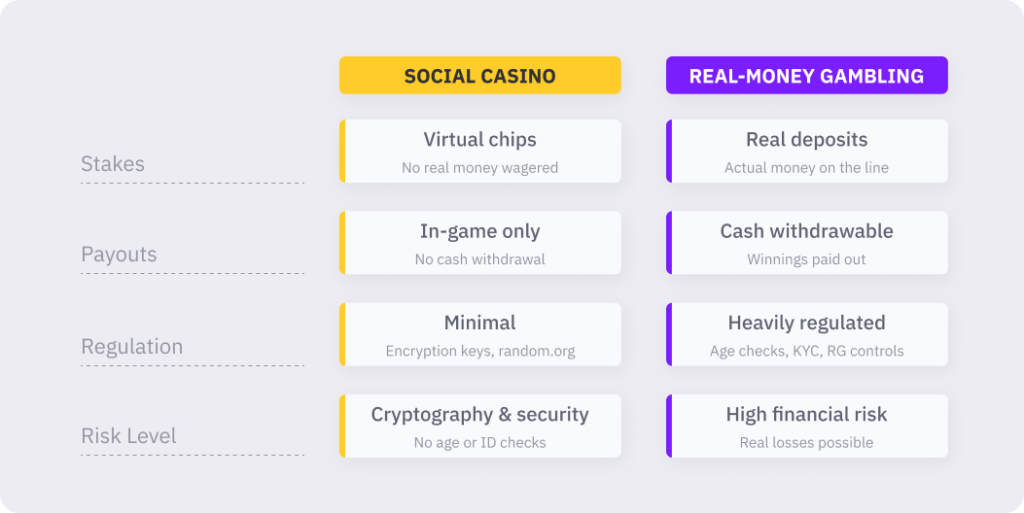
Social casino games are gambling-style titles, like slots, poker, or roulette, played with virtual credits instead of withdrawable money. Many let you start at no cost, which puts them in the wider group of free-to-play games. The biggest difference from real-money products is simple: there is no real cash payout. Wins stay inside the game, increasing your chip balance, unlocking levels, or giving you milestone rewards, but they can’t be exchanged for cash.
So, if you’re asking “what are social casino games” in a casual sense, they’re built around daily bonuses, missions, collections, clubs, gifting, and leaderboards that are designed to keep you coming back, progressing, and playing with others. Most platforms offer several types of casino games, often mixing classic slots with card and table formats in the same app or website. Social casinos often sell extra credits or perks through in-app purchases, and some also show ads, but spending is optional and linked to convenience, not profit.
Real-money online casinos work differently, since deposits fund bets, winnings can be withdrawn, and rules like age checks and ID verification are common.
How social casino games shape online gambling and market growth
The influence of social casino games on gambling is both commercial and behavioral. Since these titles simulate gambling activities and their mechanics (e.g., stakes, slot spins, poker hands, and unpredictable rewards), there are researches that point to a possible gateway effect for certain players, where repeated exposure may encourage interest in real-money gambling later on.
The social casino games market itself has seen strong growth as smartphone usage and online participation have expanded. Estimates place the global market value in the range of approximately $9 billion in 2025, with forecasts projecting continued growth toward and beyond $14 billion by the late 2020s. This expansion reflects both increasing player numbers and rising spend on optional in-game purchases and advertising.
This market size growth sits within a broader shift in the gaming vertical, where developers mix casino themes with mobile and social mechanics to keep users engaged. Rather than simple slot machines alone, many titles now blend minutes-long challenges, loyalty rewards systems, and community features that borrow from mainstream mobile gaming trends.
Industry innovation is also driving change, as studios push for new ways to retain players and diversify revenue. Hybrid models that combine purely social play with optional monetization have become more common. Alongside this, volatility in player engagement and shifting regulations, such as tighter consumer-protection and clearer ad rules, continue to shape how social casino products are developed and marketed.
Who uses social casinos and what keeps them active
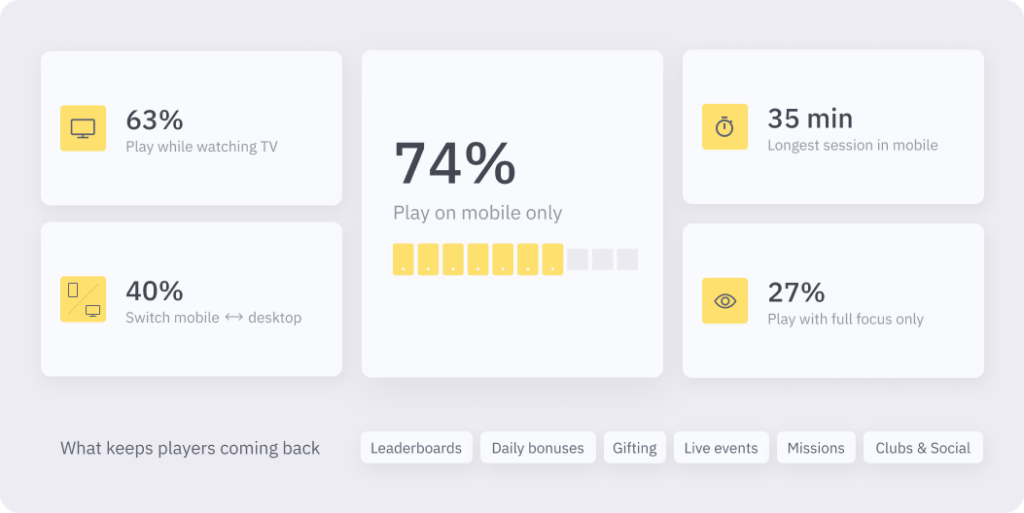
Social casino gamers come from a broad range of ages and regions, driven by easy access on smartphones/desktops and distribution through social networking sites such as Facebook. Around 74% play only on smartphones and tablets, while roughly 40% switch between mobile and desktop. For many, it stays a background activity rather than a “sit down and focus” session, with about 63% playing while watching TV and only 27% focusing on the game alone.
Cross-gender appeal is common among social casino gamers, with many titles drawing a large middle-aged female audience while also attracting plenty of younger players. Spending can look different from the wider base, as paying users are more often younger men, and purchases usually go toward extra chips or perks that reduce waiting and extend play. Longer sessions are also typical in this gaming behavior category, and mobile benchmarks often place casino and card games among the longest-session genres, with top performers reaching up to 35 minutes per session.
Competition and entertainment drive much of the appeal, with leaderboards, gifting, and shared events adding a social edge to the gameplay, while simulated risk and near-misses can give some users a feel of real gambling experience.
Analytics behind social casino engagement
Player behavior analytics help social casino teams see how people move through a title, what they tap first, how often they return, and where they drop off. Common engagement metrics include session frequency and duration, retention over time, event participation, and how often users claim rewards such as daily bonuses or mission prizes. These signals are also used to assess audience quality by separating short-term visitors from long-term players.
Because there is no cash payout, the focus shifts to keeping the in-game economy healthy by tuning how fast virtual credits are earned and spent, for example, by adjusting daily bonus amounts, mission payouts, event prize tiers, and refill timers. Analytics can flag when players run out of chips, show which offers they actually pick, and reveal when a particular level or event reduces session frequency.
BGaming has described using large-scale playtesting and feedback (including streamer-led testing with over 1,000 participants) to fine-tune releases, and its Blaze case study highlights improvements in player retention after customized BGaming online slots went live. Responsible gaming can also benefit from analytics by spotting unusually long sessions or rapid repeat purchases and triggering reminders or cooldowns.
Using LiveOps to keep players coming back
LiveOps keeps social casino titles active after launch by running planned content updates and in-game events that strengthen player engagement and give users reasons to return. Instead of relying on a one-off release, teams rotate seasonal events, themed collections, and short campaigns. Limited-time challenges often sit at the centre of these schedules, using mission chains or club tasks to drive repeat sessions and social competition.
Jackpot-style promos are also common, including time-limited jackpots that build during an event window and reset on a fixed timer. Some studios also add special bonus rounds tied to those promotions, such as event-only pick features or boosted free-spin modes, to make the moment feel different from regular play.
Monetization in social casino games
Most social casino titles earn revenue through two routes, in-app purchases and advertising, and many combine both in a single monetization setup. In-app spending usually centres on in-app currency, where users buy chip packs, bonus-spin bundles, or time-savers that remove wait timers and keep sessions going. This is where the shift from free-to-play to pay-to-play happens in practice, since progress is still possible for free, but paying makes it faster and smoother.
Ads tend to sit on the “optional reward” side rather than interrupting play, as watching a video can refill chips, unlock an extra spin, or boost event points, letting non-paying users trade attention for value. For studios, that also supports user acquisition, since early rewards can help new players stay long enough to form a habit.
Hybrid strategies are now considered a standard, providing limited-time offers tied to LiveOps events, VIP-style perks, and subscriptions can help developers monetize without relying on a single mechanic.
Developers and slot providers in social casino gaming
Behind every successful social casino title sits a social casino game developer who designs the full experience, not just the game logic. That work includes balancing virtual chip flow, setting reward pacing, planning LiveOps calendars, and deciding how social features like clubs, gifting, and leaderboards fit into casual play. Analytics then guide changes, helping teams spot where users stall, what offers feel fair, and which events bring people back naturally.
Slot game providers add another layer by supplying fresh content that keeps platforms competitive. Studios like BGaming support operators and aggregators with new themes, feature-led mechanics, and game formats that translate well to social play, such as event-friendly bonus rounds and progression-driven unlocks.
BGaming social casino games
As a casino game provider, BGaming offers titles that perform strongly in social-first formats, and you can play demo games free right on the official website. These four examples highlight features that suit quick sessions, repeat play, and event-style promotions:
- Tile Master: lets users pick from several volatility modes and build toward a 12-tile goal that increases the top prize.
- Top Eagle: a crash-style game where the multiplier rises as the plane climbs, backed by Best Drop tracking, achievements, and cosmetic plane skins.
- Surrender Multihand Blackjack: speeds up blackjack with up to three hands, a surrender option, Turbo mode, and side bets like 21+3 and Perfect Pair.
- Alice WonderLuck: a feature-rich slot built around Mystery symbols, with an optional SpinUp™ mode that guarantees special drops before revealing random symbols and special golden variants.
Key takeaways
Online social casino games copy the structure of casino play while keeping outcomes locked to in-game value rather than withdrawals. That mix of accessibility, social design, and constant updates explains why the category only keeps expanding. Here are the key takeaways:
- Virtual credits and rewards replace real cash payouts, but risk cues can still resemble gambling behavior.
- Social features like clubs, gifting, and leaderboards turn solo sessions into shared competition.
- LiveOps fuels return play through seasonal events, challenges, and timed jackpots.
- Analytics help teams tune chip rewards and refill pacing, and can support responsible gaming.
- Monetization blends in-app currency sales with rewarded ads.
- Hybrid formats are rising as studios borrow mechanics from broader mobile gaming to attract more players.
For iGaming providers, the upside is clear: social-friendly mechanics and faster testing cycles create room for high-quality content and stronger long-term partnerships.
FAQ
What are social casino games?
Social casino games are free-to-play, casino-style titles that use virtual credits instead of real-money stakes. You play slots, poker, or roulette for progression and social features, with optional purchases or ads, but no cash payouts.
How do social casino games differ from real-money gambling?
Social casino games use virtual credits and don’t allow withdrawals or any real cash payout. Real-money gambling requires deposits, pays out winnings, and is usually regulated, with age checks, KYC, and responsible gambling controls.
What is the current size of the social casino games market?
Recent industry estimates put the social casino games market at about $10.1 billion in 2026, up from roughly $9.3 billion in 2025, with continued growth expected as mobile play and in-app spending expand.
Which brands dominate the social casino gaming market?
Leading social casino brands include Playtika, Aristocrat Leisure Ltd., Light & Wonder Inc., Zynga, and Caesars-branded social slots, which regularly rank among top-grossing casino apps.
Which social casino games are worth trying?
Start with well-made and frequently updated titles: Slotomania or House of Fun for slots variety, Jackpot Party for event-driven slots, Heart of Vegas for themed collections, and Zynga Poker if you prefer social card play.
How does volatility affect social casino slots?
Volatility controls how often you win and how big the payouts are. Low volatility pays small wins frequently, while high volatility varies much more, with longer dry spells but bigger payouts.
Can you play social casino games for free?
Yes! Most online social casino games let you start free and refill chips through daily rewards, missions, and events. Spending is optional, usually via in-app currency packs. Some apps also offer chip refills for watching ads.
How safe are social casino games for users?
Social casino games are safer than real-money gambling in one key way: there are no withdrawals or real cash payouts, so you can’t lose winnings through gambling. Yet risks still exist, mainly as overspending on in-app purchases.

Let’s start a conversation
Would you like to start conversation with BGaming in any field? Drop us a line!
CONTACT US